
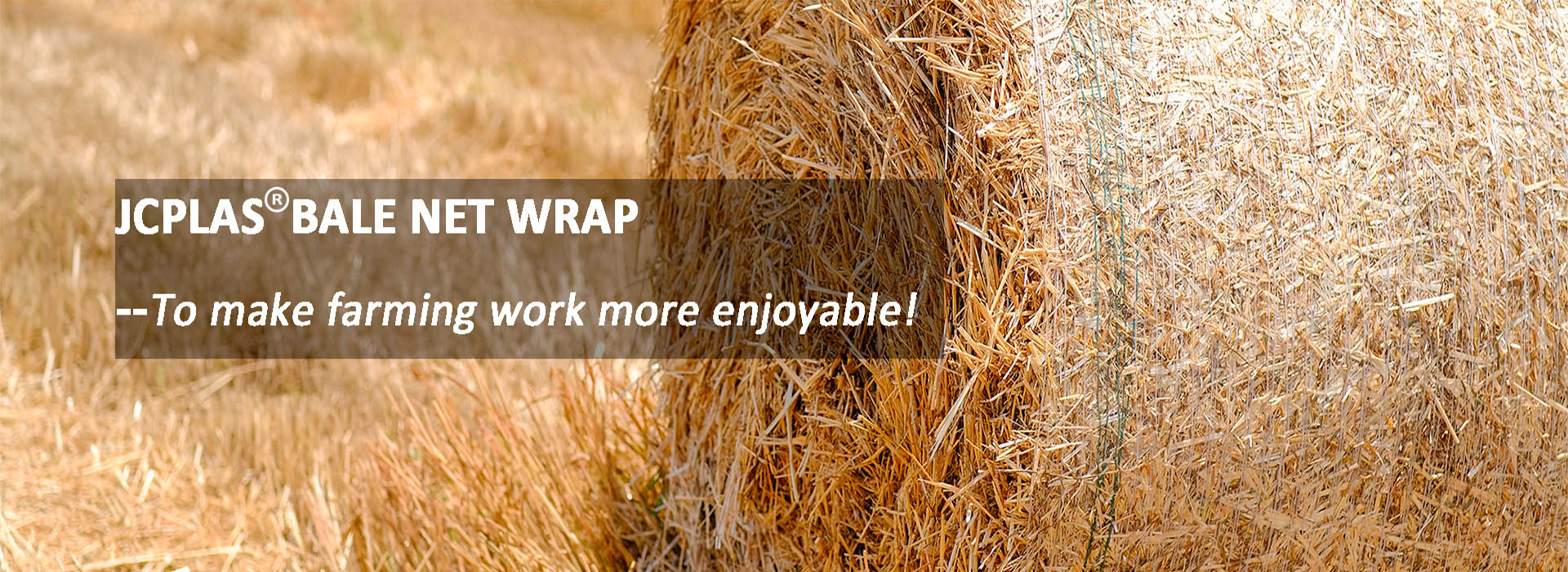
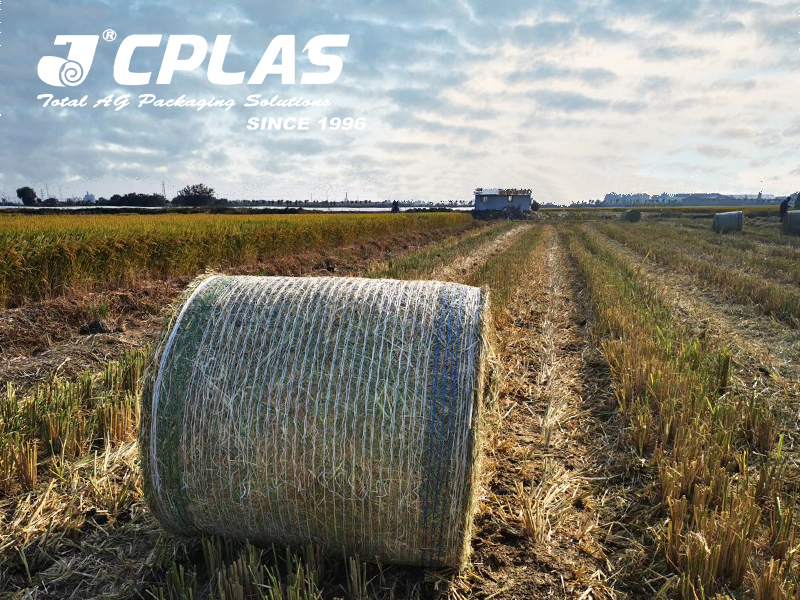
Introduction: Hay Bale Net Wrap VS Baler Twine
When farmers prepare hay bales, one common decision always comes up: should you use hay bale net wrap or traditional baler twine? Both options secure round bales produced by your baling machine, but their performance, labor cost, weather resistance and long‑term storage results differ greatly. Many buyers look for hay bale net wrap factory quotations before placing bulk orders. The wrapping material you select directly affects harvest efficiency, feed quality and overall farm profit.
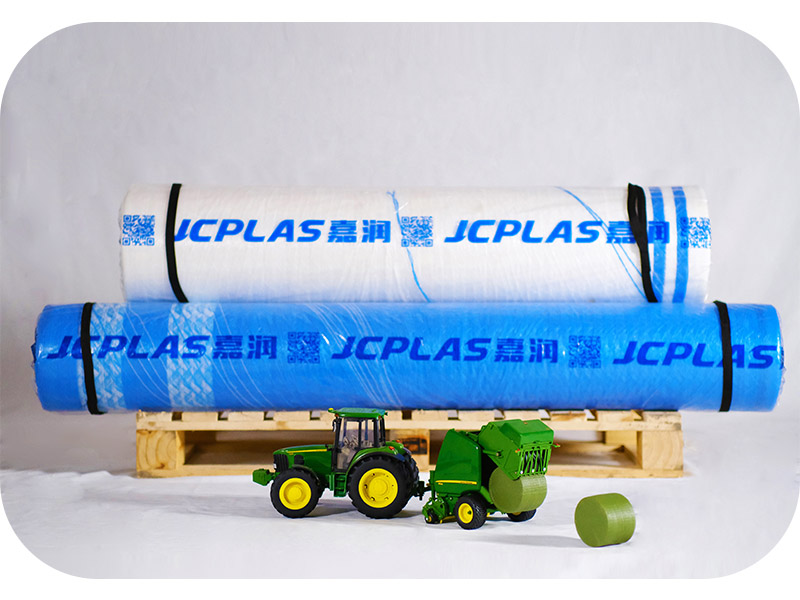
Hay bale net wrap is a knitted polyethylene netting manufactured for the wrapping of round crop bales. It fully covers the curved surface of each round hay bale within only 2 to 3 rotations of the baler. Baler twine, by contrast, is polypropylene or sisal string that wraps around bales in spaced lines, requiring many more rotations to tie and lock the bale shape.
Both materials work for hay bales, yet they are built for different operational needs. Hay retains valuable leaf nutrition that you want to preserve during baling, transport and storage. Your wrapping material will decide how much crop you lose before feeding livestock.
Side‑by‑Side Performance & Price Comparison
| Comparison Item | Hay Bale Net Wrap | Baler Twine |
|---|---|---|
| Baler rotations per bale | 2–3 rotations | 15–30 rotations |
| Baling wrapping time per bale | 5–10 seconds | 30–60 seconds |
| Output capacity | Up to 30% more bales per hour | Lower hourly throughput |
| Dry matter loss (6 months outdoor storage) | 5%–8% | 10%–15% |
| Bale breakage rate during transport & stacking | 2%–5% | 12%–20% |
| Material cost per standard round bale | Higher upfront material cost, better factory bulk price | Lower initial purchase cost |
| Surface coverage | Full continuous coverage | Partial, spaced lines with gaps |
Key Advantages and Practical Scenarios
1. Baling Speed & Field Efficiency
Hay bale net wrap wins when you need high throughput. Each hay bale only takes a few machine rotations to finish wrapping. For large farms and baling contractors handling hundreds of hay bales every day, the time saved adds up to more finished bales per hour and less fuel consumption. Twine takes significantly longer, because the baler needs multiple wraps and knot‑tying cycles. If you have limited harvest windows during rainy seasons, speed becomes a critical advantage.
2. Bale Shape and Resistance to Breaking
Hay bale net wrap holds hay bales in a tight, uniform shape. Hay bales tend to expand after compression, full‑surface wrapping prevents loose edges and crumbling. Twine only holds bales at separated lines. When you stack, transport or move bales multiple times, twine‑wrapped bales are much more likely to lose shape and break open. Broken bales mean wasted forage and extra cleanup work on your farm.
3. Outdoor Storage and Moisture Resistance
Many farmers store round hay bales directly in open fields. Hay bale net wrap creates a continuous protective layer, helping rainwater run off the bale surface. It keeps hay bales intact for months of outdoor storage. Twine leaves large gaps between strings, letting rain and dew penetrate deep inside the bale, causing mold, rot and nutrient loss, especially in humid climates. Test data shows net wrap can cut dry‑matter spoilage nearly in half for outdoor‑stored bales over six months.
When to Choose Baler Twine Instead
Baler twine still has its place. If you run an older baler model that cannot install net wrap equipment, twine will be your practical pick. It also carries a lower upfront per‑unit price, which can suit small‑scale farms that only produce a small number of hay bales and keep them under covered shelter for short‑term use. If your bales will be consumed quickly and never stacked high, twine can serve simple baling tasks.
About JCPLAS Factory
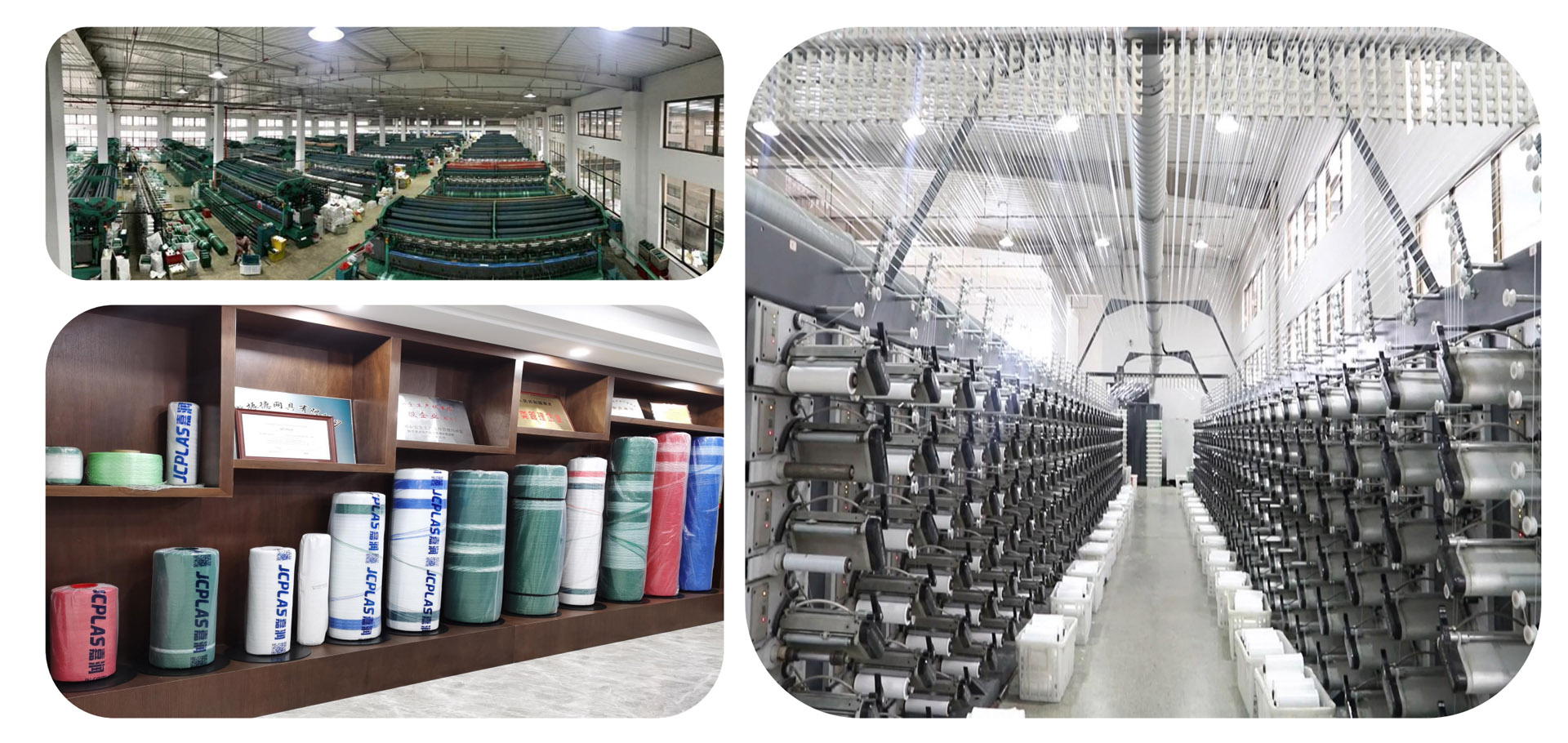
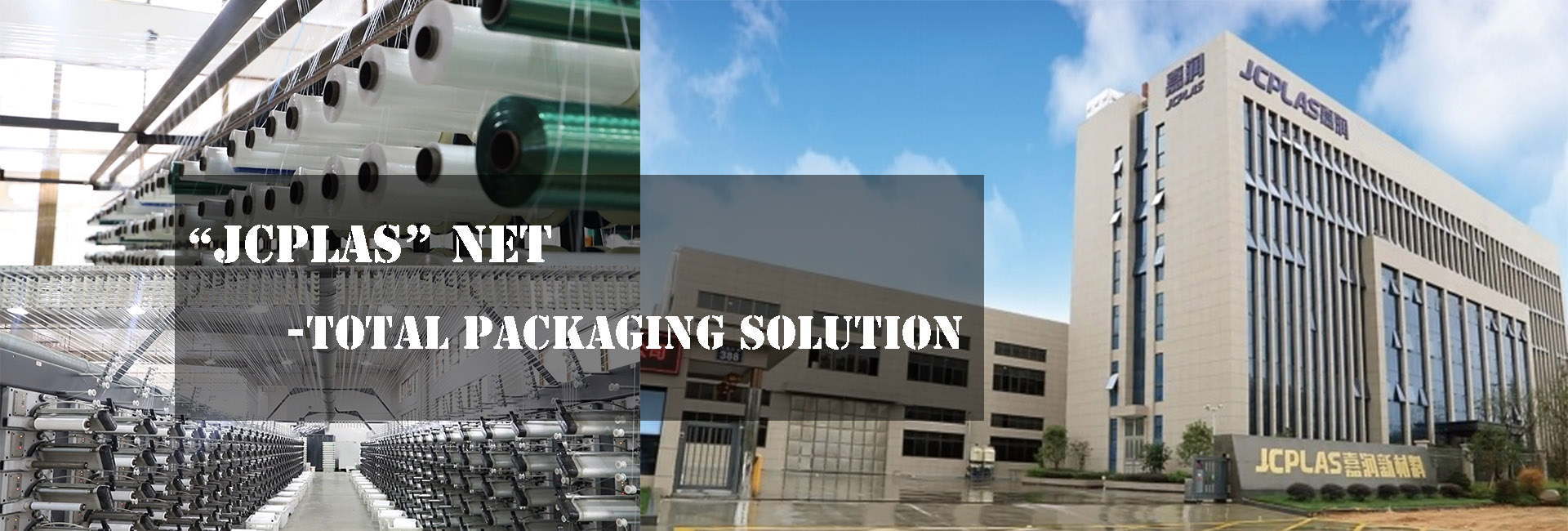
TOTAL PACKAGING SOLUTION is how we define “JCPLAS”.
At JCPLAS, we provide a complete “Total AG Packaging Solution”—from design and management to manufacturing and delivery. Our comprehensive approach helps our customers gain a competitive edge in the market place. Our mission is to enhance packaging efficiency by offering innovative solutions, all while delivering an unmatched customer experience.
For over 28 years, and through TWO generations, JCPLAS Co. has proudly served the agricultural industry. We offer high‑quality, year‑round service and provide the best crop‑baling products, including Net Wrap, Baler Twine, Silage Film, Pallet Wrapping Net, Anti‑bird net, and other related packaging solutions—at industry‑leading prices.
Our goal is to help make your business more efficient and profitable. We are committed to keeping our partners fully supplied with the products and prices they need to lead in their market areas.
A) Reliability, Endurance, Performance.
B) JCPLAS® Premium Bale Net wrap: the quality you can rely on to wrap your bales tightly, securely and economically.
Years of experience go into every roll of JCPLAS® Bale Netwrap as a result of JCPLAS’s work with the baler manufacturers in developing net wrapped bales.
Final Recommendation for Hay Bales
For most commercial farms and hay processing operations, hay bale net wrap delivers better long‑term value. Even though the initial roll price is higher, you save money by reducing crop waste, cutting field working hours and minimizing damaged bales during transport and outdoor storage. It works perfectly for round hay bales for livestock feed.
Choose baler twine only for small‑scale, indoor short‑term storage, or when your baler machine cannot support net wrap installation.
Frequently Asked Questions
Q: Which has better hay bale net wrap price when buying from factory?
A: Baler twine has lower per‑roll upfront price. But you need to calculate real cost per finished hay bale; hay bale net wrap reduces bale loss and labor cost for large‑volume baling jobs.
Q: Can I use baler twine for outdoor‑stacked hay bales?
A: It is not recommended for long‑term outdoor storage. Gaps between twine strands allow rain penetration, leading to higher dry‑matter loss and mold risk.
Q: Can my old round baler use hay bale net wrap?
A: Some older balers lack net‑wrap mounting assemblies. Please send your baler model number to our technical team for confirmation before placing factory orders.
Request Factory‑Direct Quotation
If you are a farm owner, baling contractor or distributor sourcing hay bale net wrap or baler twine for hay bales, please send your inquiry.
Please share these details:
1) Baler model or required net wrap width
2) Target quantity (rolls / pallets / containers)
3) Main crop: hay
4) Storage condition: indoor or outdoor stacking duration
5) Special requirements: UV grade, custom size or private‑label printing.
Our sales team will reply with hay bale net wrap factory price and practical technical suggestions quickly.
ADDRESS
388 JIANGNAN ROAD, GEXIANG INDUSTRY AREA, RUIAN, ZHEJIANG, CHINA
SALES INQUIRY
Oscar: jc@chinanetwrap.com
Melody: melody@chinanetwrap.com
Echo / Santori: Echo@chinanetwrap.com / Santori@chinanetwrap.com
HOURS
24hours/7DAYS
(Global):0086‑577‑58877667
(Local): 0086‑577‑58877159